Educational Evaluations (Learning)
Get the Accommodations You Deserve. Testing For All Ages
Free 15-Minute ConsultationDo you or a family member struggle with spelling, pronunciation challenges, and/or reading and writing errors? You're not alone—and help is available.
Minding My Own uses the latest advancements in psychological test measures to identify symptoms and provide formal accommodations for dyslexia and learning disorders.
What is Dyslexia? Dyslexia is a language processing condition that affects millions of Americans. Successful, brilliant people have been diagnosed with dyslexia—including John Lennon, Steve Jobs, Bill Gates, Jennifer Aniston, Florence Welch, Salma Hayek, and Steven Spielberg.
Dyslexia is NOT a negative assessment of intellectual functioning. It simply means the brain processes language differently. People with dyslexia often spend significant time and energy reading and understanding content—tasks that may seem mundane to others. Many struggle in silence or become frustrated without finding the accommodations that could make life much easier.
Did you know? Approximately 1 in 5 people have dyslexia, yet only 2 million of the estimated 40 million US adults with dyslexia have received a formal diagnosis.
The Latest in Testing: We use the Tests of Dyslexia (TOD: 2023), created by leading psychologists in academic achievement evaluations. This cutting-edge battery provides standardized, evidence-based assessment—replacing the inconsistent methods of the past. The TOD includes an intervention guide for classroom instruction and is ideal for college students seeking extended time on standardized tests.
After your evaluation, we'll schedule a feedback session where you'll receive actionable steps you can use immediately—including sharing your report with schools, universities, or employers to secure appropriate accommodations.
Why Choose Minding My Own for Learning Disabilities Testing?
⚡ Immediate Availability
While other clinics have 6+ month waitlists for psychoeducational evaluations, we offer appointments within days. Get answers when they matter most.
📋 Complete in 2 Weeks
From your first appointment to receiving your comprehensive report—just 14 days. Perfect timing for IEP meetings, college accommodations, or school planning.
🎯 Latest Testing Technology
We use the Tests of Dyslexia (TOD: 2023)—the most advanced, standardized assessment available. Evidence-based testing that provides accurate diagnosis and comprehensive intervention recommendations.
📱 Responsive Communication
Questions answered within 24 hours during business hours. We keep parents and students informed every step of the way.
🏆 Award-Winning Care
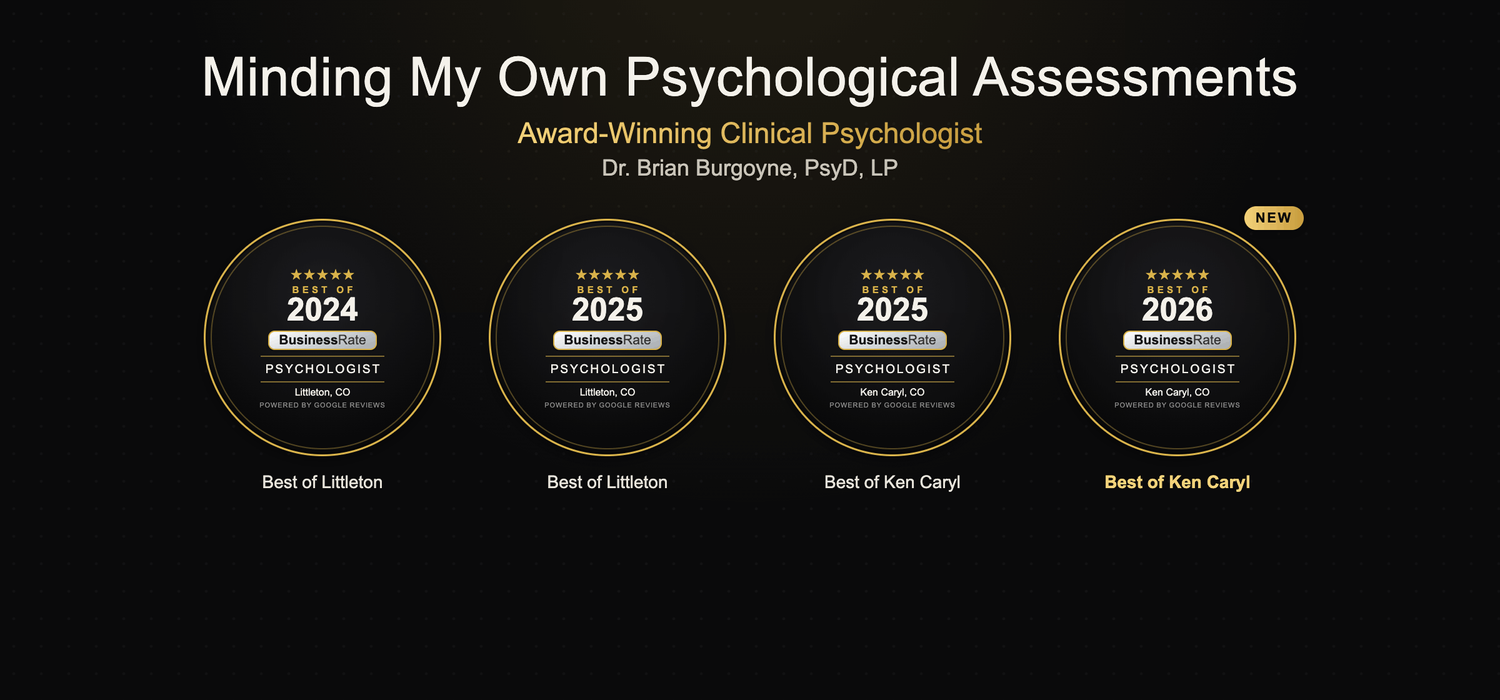
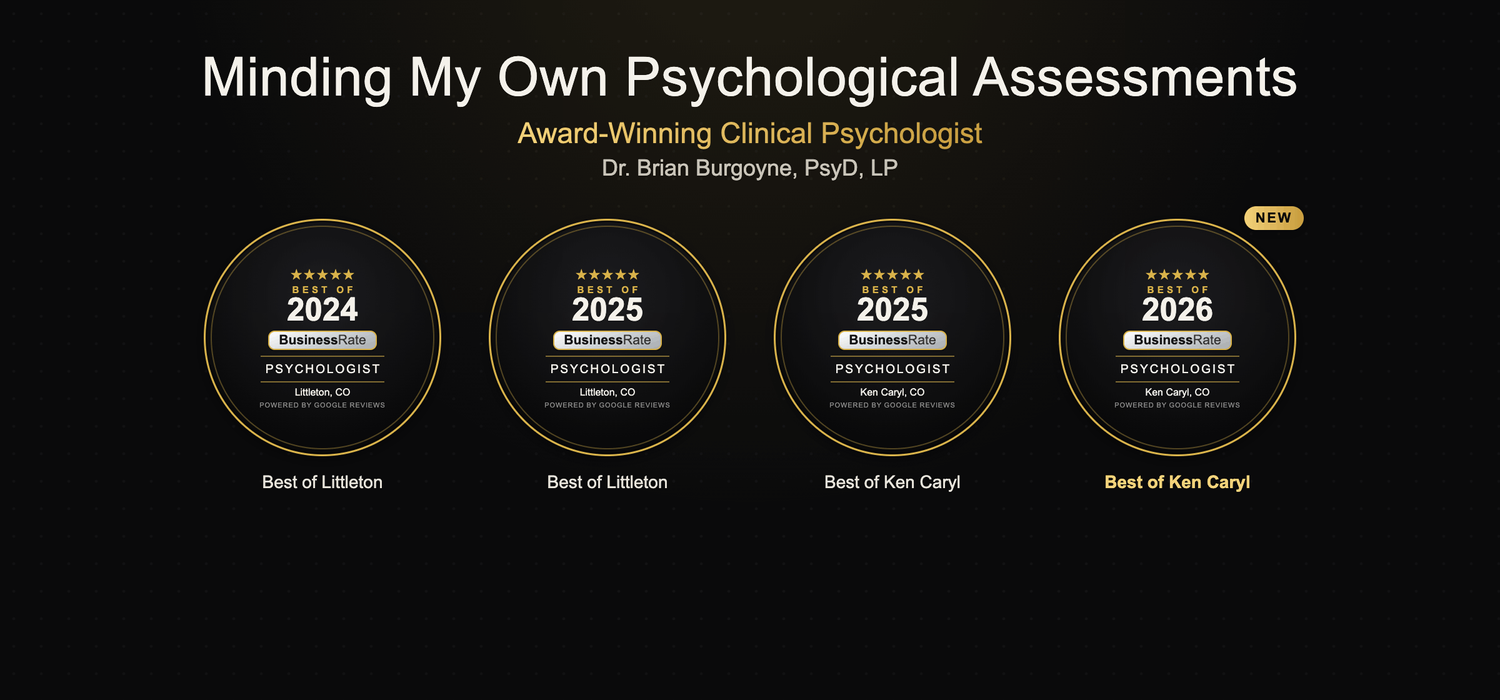
Best of Littleton Clinical Psychologist 2024 & 2025. Trusted expertise in identifying and documenting learning differences.
💰 Insurance-Friendly
We provide insurance verification and detailed superbills for reimbursement. Making quality assessment accessible to families.
Understanding Learning Disabilities
Learning disabilities are neurological differences that affect how the brain processes information. They are NOT related to intelligence— many individuals with learning disabilities have average or above-average IQ. With proper identification and support, students with learning disabilities thrive academically.
Dyslexia (Reading)
- Difficulty with phonological processing
- Slow, labored reading despite effort
- Difficulty sounding out words
- Poor spelling despite instruction
- Pronunciation challenges
- Reading comprehension below ability level
- Avoiding reading tasks
Dysgraphia (Writing)
- Illegible or inconsistent handwriting
- Difficulty organizing thoughts on paper
- Poor spelling and grammar
- Slow writing speed
- Difficulty with fine motor coordination
- Gap between verbal and written expression
- Avoiding writing tasks
Dyscalculia (Math)
- Difficulty with number sense
- Trouble memorizing math facts
- Difficulty with mental math
- Confusion with math symbols
- Difficulty telling time or counting money
- Struggles with mathematical reasoning
- Anxiety around math tasks
Who Benefits from Learning Disabilities Testing?
Elementary Students
Struggling to learn to read, falling behind peers, homework battles, early intervention needs, qualifying for special education services.
Middle & High School Students
Declining grades despite effort, need for IEP or 504 accommodations, preparing for standardized tests, understanding learning differences.
College Students
Struggling with coursework, need for extended time on exams, documentation for testing agencies (SAT, ACT, MCAT, LSAT, GRE), disability services registration.
Adults
Finally understanding lifelong struggles, workplace accommodations, professional licensing exam accommodations, career planning based on strengths.
Our Psychoeducational Evaluation Process
A comprehensive assessment that identifies specific learning differences and provides actionable recommendations.
1. Free 15-Minute Consultation
We discuss your concerns about learning, answer questions about the evaluation process, and determine if testing is appropriate.
2. Clinical Interview (60-90 minutes)
Comprehensive discussion of academic history, developmental milestones, previous interventions, current struggles, and family/medical history.
3. Comprehensive Testing (4-5 hours)
Evidence-based assessment including the Tests of Dyslexia (TOD: 2023), cognitive/IQ testing (WAIS-IV or WISC-V), academic achievement measures (reading, writing, math), processing speeds, and executive functioning assessment.
4. Teacher/Parent Rating Scales
Questionnaires completed by those familiar with the student's academic functioning to provide context across settings.
5. Analysis & Report Preparation
We analyze all data to identify patterns, determine if specific learning disabilities are present, and develop tailored recommendations including intervention strategies.
6. Feedback Session (60 minutes)
We review findings together, explain test results in understandable terms, discuss diagnosis, and provide specific recommendations for interventions and accommodations. You receive actionable steps you can use immediately, plus your comprehensive report the same day.
What Your Learning Disabilities Evaluation Includes
Cognitive Profile (IQ Testing)
Complete understanding of intellectual strengths and weaknesses, including verbal comprehension, visual-spatial reasoning, working memory, and processing speed.
Latest Dyslexia Assessment
Tests of Dyslexia (TOD: 2023)—the most advanced, standardized battery available for accurate diagnosis and comprehensive recommendations.
Academic Achievement Testing
Precise measurement of reading (decoding, fluency, comprehension), writing (spelling, composition), and math skills compared to age/grade expectations.
Specific Learning Disability Diagnosis
Clear determination of whether dyslexia, dysgraphia, dyscalculia, or other learning disabilities are present, with severity levels and functional impact.
School Accommodation Documentation
Reports accepted for IEP (Individualized Education Plan) and 504 Plan meetings, with specific accommodation recommendations based on testing results.
Testing Accommodations Letter
Documentation for College Board (SAT/AP), ACT, LSAC (LSAT), AAMC (MCAT), GRE, professional licensing exams, and college disability offices.
Intervention Recommendations
TOD-specific intervention guide for classroom instruction, evidence-based strategies for teachers and parents, and recommendations for assistive technology.
Actionable Next Steps
Clear guidance on how to share your report with schools, universities, or employers, plus immediate strategies to implement at home and in the classroom.
Meet Dr. Brian Burgoyne, PsyD, LP
Best of Littleton Clinical Psychologist 2024 & 2025
Dr. Burgoyne is a licensed clinical psychologist specializing in psychoeducational evaluation and learning disabilities assessment using the latest evidence-based measures, including the Tests of Dyslexia (TOD: 2023). He has completed over 500 comprehensive psychological assessments since 2023, with extensive expertise in identifying dyslexia, dysgraphia, dyscalculia, and processing disorders across all age groups.
Parents appreciate his clear explanations, quick turnaround time, and comprehensive reports that schools, colleges, and testing agencies accept. Dr. Burgoyne serves students and adults ages 6-89 throughout the Denver metro area, with both in-person and telehealth feedback options.
Frequently Asked Questions
How long does learning disabilities testing take?
The entire process—from initial consultation to receiving your comprehensive report—takes approximately 2 weeks. The testing session itself is typically 4-5 hours (may be split across two sessions for younger children).
How common is dyslexia?
Dyslexia affects approximately 1 in 5 people. An estimated 40 million US adults have dyslexia, yet only 2 million have received a formal diagnosis. Many successful people—including Steve Jobs and Steven Spielberg—have dyslexia.
What makes the TOD (Tests of Dyslexia) different from older assessments?
The TOD (2023) provides standardized, evidence-based assessment using the latest research. Unlike older methods that varied between psychologists, the TOD offers consistent, reliable diagnosis plus a comprehensive intervention guide.
Will this report be accepted by schools?
Yes. Our comprehensive psychoeducational evaluations meet requirements for IEP and 504 Plan eligibility determinations. We provide all necessary documentation for school accommodations.
Can you test for accommodations on the SAT, ACT, MCAT, or LSAT?
Absolutely. Our reports meet College Board (SAT/AP), ACT, LSAC (LSAT), AAMC (MCAT), and other testing agencies' documentation requirements for extended time and other accommodations.
Does dyslexia mean my child isn't smart?
Absolutely not! Dyslexia is NOT related to intelligence. Many people with dyslexia have average or above-average IQ. It simply means the brain processes language differently—and with the right support, students with dyslexia thrive.
What if my child is already receiving special education services?
An independent evaluation can provide additional insights, verify the school's findings, or identify issues the school may have missed. Our comprehensive testing often reveals specific needs that lead to better services.
Do you take insurance?
We provide insurance verification and detailed superbills for out-of-network reimbursement. Many families receive 50-80% reimbursement from their insurance company.
Request An Online Appointment From the Home Page Or Call Below to Schedule
No waitlist. Comprehensive learning assessment. Testing for school accommodations.
Serving the greater Denver Metro Area
Call to Schedule Your Free ConsultationAges 6-89 | In-Person & Telehealth Options